Every year, 350,000 people die from cardiac arrest in the United States. Big number. Bigger opportunity. With your help, we can bring that number down to ZERO.
Learn it. Teach it. Save a life.
Call Now!! +1 (908) 361-7320
Our mission: Make CPR knowledge as common as knowing how to call 911
Saving lives through CPR training
- BLS Certification & Online Training
- CPR/AED Certification & Online Training
- First Aid Certification & Online Training
- PALS Certification & Online Training
- Infection Control Certification
- HIPAA Compliance Training & Online Certification
What To Expect From
Your CPR Class
Find A Class
If you are interested in taking a course to learn the lifesaving skills of CPR, first aid, and AED, use the Find A Course Tool to locate a Training Center near you.If you are interested in taking a course to learn the lifesaving skills of CPR, first aid, and AED, use the Find A Course Tool to locate a Training Center near you.
Ready to Learn
CPR – or Cardiopulmonary Resuscitation – is an emergency lifesaving procedure performed when the heart stops beating. Immediate CPR can double or triple chances of survival after cardiac arrest.
Payment Processing
Just a quick note to confirm that payment will be collected on-site. We accept all major forms of payment, including credit/debit cards (Visa, Mastercard, Amex), tap-to-pay, Apple Pay, and cash.
Get Certified
Students must complete an in-person skills practice and testing session with an AHA Instructor after they complete the online portion. The Instructor will evaluate the student's skills and upon successful completion of both portions of the course, the student will receive a course completion card, valid for two years.
Heart Attack vs. Cardiac Arrest
What is Cardiac Arrest?
Occurs when the heart malfunctions and stops beating unexpectedly. Cardiac arrest is an “ELECTRICAL” problem.
What is a Heart Attack?
Occurs when blood flow to the heart is blocked. A heart attack is a “CIRCULATION” problem.
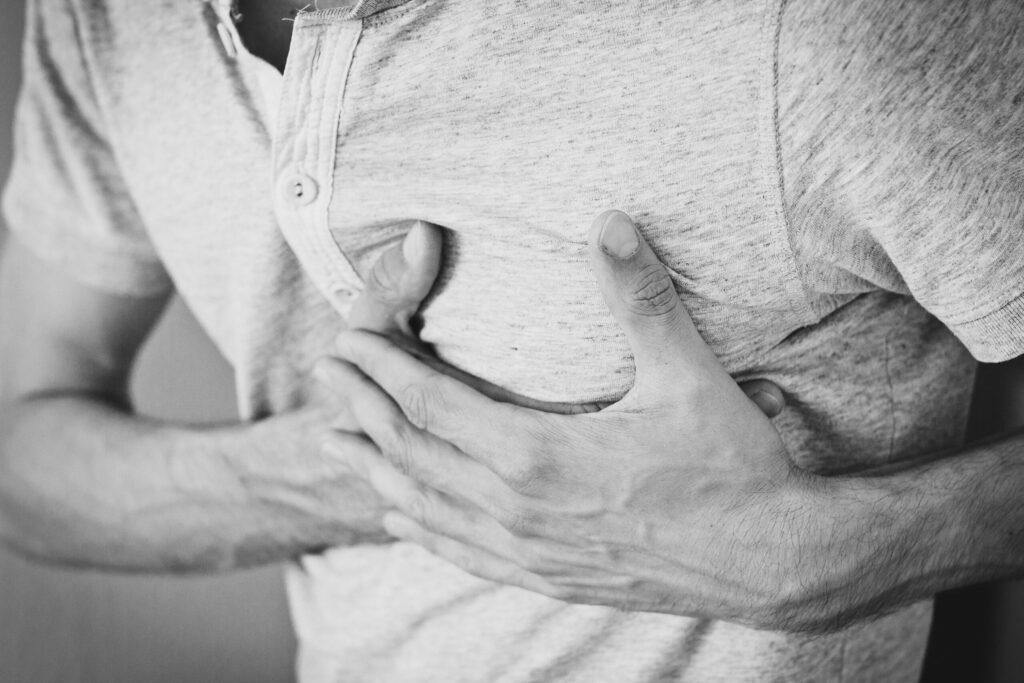
For more information on Cardiac Arrest vs. Heart Attack, view the infographic.
Children Can Perform Successful CPR
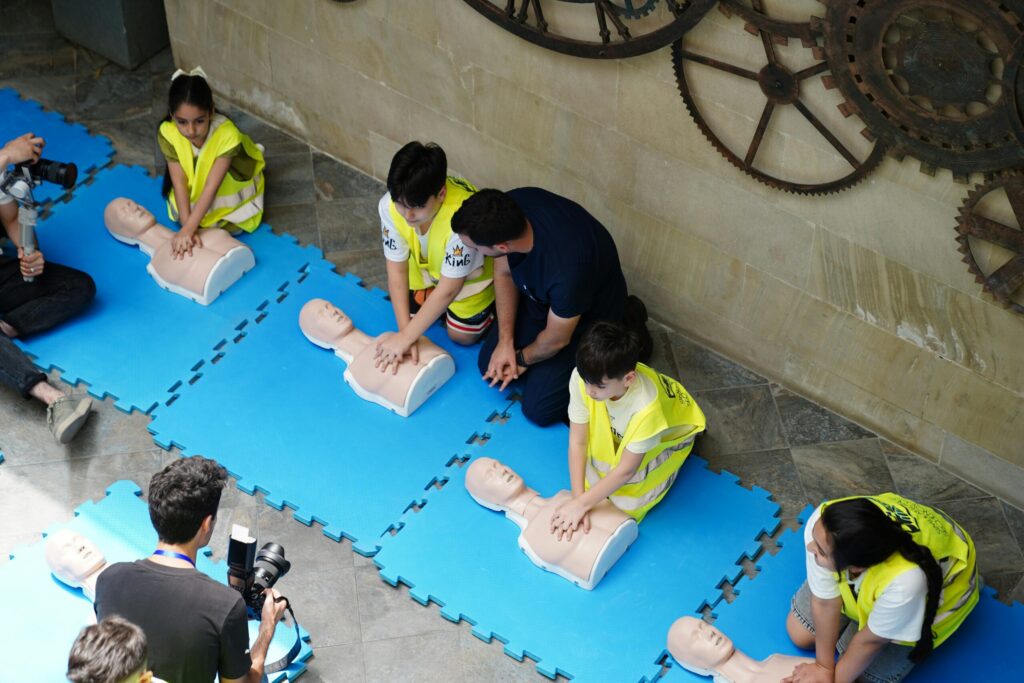
A recent study tested sixth graders and their capacity to use Hands-Only CPR to save lives. The study found that the majority of children could perform CPR in the correct location and at the appropriate compression rate, making this a viable group to train to help save lives. In fact, the AHA is dedicated to training the next generation of lifesavers through its CPR in Schools program. We led the charge to make CPR training a high school graduation requirement in 34 states – and counting!
Frequently Asked Questions
We come to YOU – offering on-site CPR, First Aid, and safety training for individuals, groups, and businesses.
Why Is CPR Important?
Cardiopulmonary Resuscitation (CPR)
Keeping the blood flow active – even partially – extends the opportunity for a successful resuscitation once trained medical staff arrive on site.
What is the correct order to do CPR?
CPR for adults: Give 30 compressions followed by 2 breaths. This is known as “30:2”. Aim for 5 sets of 30:2 in about 2 minutes (if you are only doing compressions, aim for about 100 to 120 compressions per minute).
What is AED?
Automated External Defibrillators (AED)
AEDs can greatly increase a cardiac arrest victim’s chances of survival. The AHA offers a two-page guide on how to implement an AED program at a company or organization. To minimize the time to defibrillation for cardiac arrest victims, deployment of AEDs should not be limited to only trained people (although training is still recommended).
Learn more about how the use of AEDs can dramatically boost survival of cardiac arrest patients.
When is it time to renew my certification?
AHA Certification is valid for 2 years.
Are the classes offered online?
Many AHA lifesaving training courses are available online via ShopCPR. Courses that involve only cognitive learning can be completed entirely online.

We serve the five Boroughs in the tristate area- Manhattan, Brooklyn, Queens, The Bronx, and Staten Island which includes New York, New Jersey, and Connecticut.
** Serving Greater Atlanta, including Marietta, Decatur, and Sandy Springs. Group classes are available statewide upon request. **